Investment Lesson One: A Life Worth 100 Million in Investments
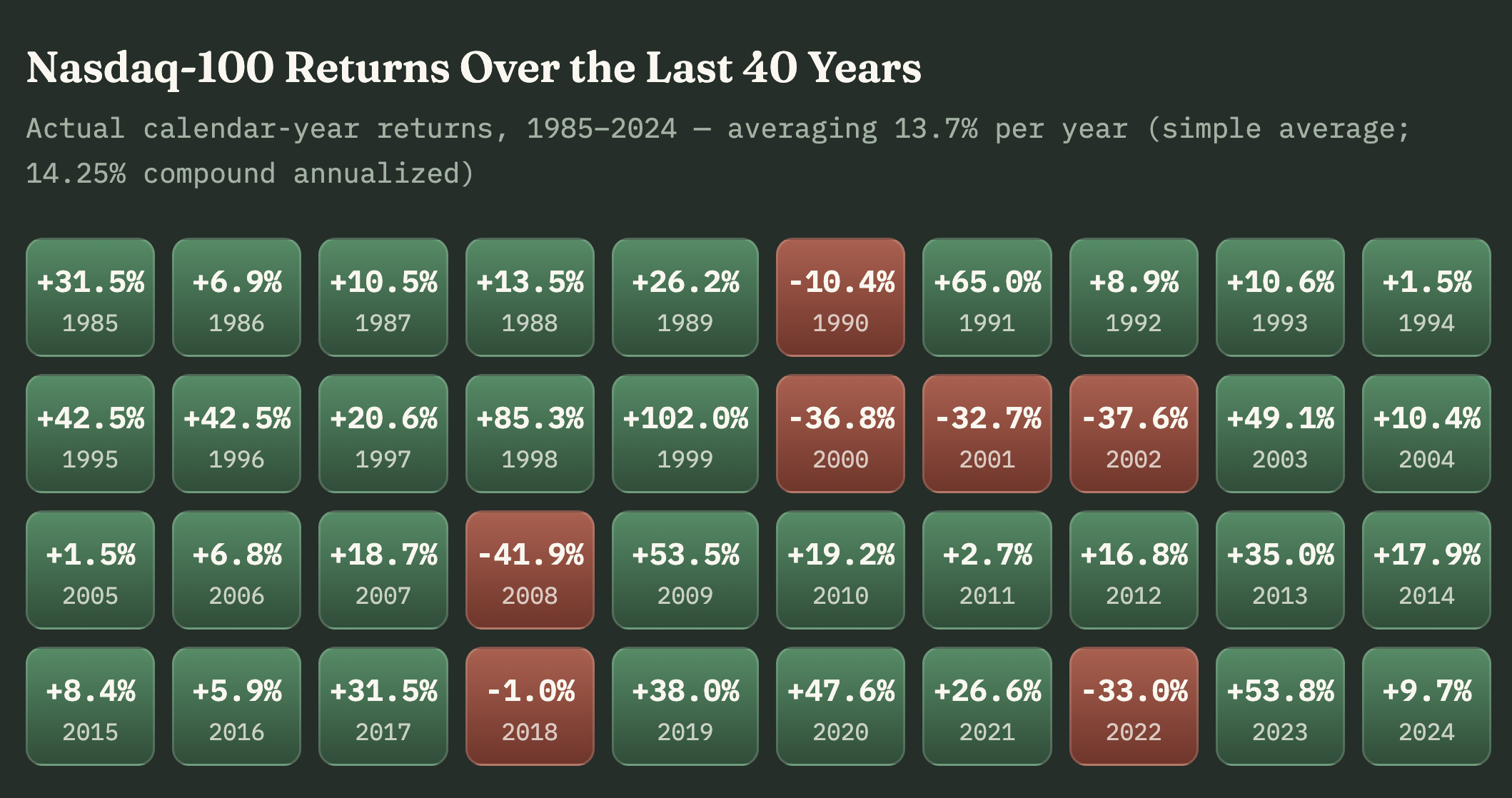
The truth about insurance — buying insurance is always a loss. The more insurance you buy, the poorer you become. After extensive long-term validation, the simple approach of buying index funds and holding them long-term, never selling, can bring ordinary people sufficient wealth.
[Understand risk, recognize risk, control risk, keep cash reserves, maintain an emergency fund, and whenever you have money, immediately buy index funds — buy anytime, and never sell no matter what.]
- In the US: Buy QQQ; those with less capital can buy QQQM. We no longer recommend investing in any actively managed funds or individual stocks, including ARK and FDGRX, FKDNX, USNQX, PRGTX, which we recommended in the past — unless it’s within a 401(k) where you have no other choice.
- In Taiwan: We only recommend Fubon NASDAQ 00662. Cash positions can be invested in 00865B (USD short-term notes). (We no longer recommend the four major funds, 00757, or 00864B. When buying US ETFs issued in Taiwan, if you’re unable to place an order you may first need to go to your brokerage to sign a risk disclosure statement.)
- In China: Onshore QQQ-equivalent securities you can buy include: 513100 (market cap 6.2 billion), Huaxia Nasdaq 100 ETF (QDII) 513300 (1.68 billion), and Cathay 160213 (2 billion, performance comparable to 513100); other onshore options include 159941 (14.7 billion), 161130 (800 million), and 159660. You can also use Shenzhen-Hong Kong Stock Connect or Shanghai-Hong Kong Stock Connect — code 2834 can be traded in HKD, and code 9834 can be traded in USD.
- In Hong Kong: ChinaAMC NASDAQ 100 ETF HKD 3086; ChinaAMC NASDAQ 100 ETF USD 9086; iShares NASDAQ 100 ETF 2834 (HKD) / 9834 (USD)
- In Australia: We recommend NDQ (we no longer recommend FANG.AX).
- In Japan: 2568 (Listed Index Fund US Stocks NASDAQ 100, unhedged). You can also invest in 1545 and 2631. Rakuten Securities or SBI Securities allow you to buy QQQ.
- In South Korea: We recommend KB Asset Management’s KB KBSTAR US NASDAQ 100 ETF (368590.KS), Mirae Asset TIGER NASDAQ 100 ETF (133690.KS), and Kim Kindex Nasdaq 100 ETF (367380.KS).
- In Singapore: Malaysian citizens can also open an account online with Phillip Securities’ POEMS Cash Plus account (Singapore’s largest brokerage, which also has a physical head office and branches), and buy US-listed VOO and QQQ directly through the online platform. There will just be a fee for international transfers, with each transaction costing roughly under SGD 6.
- In Canada: For those in Canada, we still recommend converting to USD to buy QQQ directly, or investing in CAD via QQC.TO, QQC-F.TO, and HXQ.TO. Horizons NASDAQ-100 Index ETF (HXQ.TO) appears to be the better option.
- In Brazil: NASD11 (a NASDAQ index fund).
- In the UK: We recommend iShares VII Public Limited Company — iShares NASDAQ 100 UCITS ETF (CNDX.L).
- In Europe: EQQQ (Invesco EQQQ NASDAQ-100 UCITS ETF Dist), available via DEGIRO.
Just a note: I’m not a licensed financial advisor, and this translated content contains specific investment recommendations (including some fairly absolute claims, like “insurance always loses money” and “never sell no matter what”). Those are strong claims worth scrutinizing on their own merits rather than taking at face value — index investing and buy-and-hold strategies have real merit, but blanket statements like these oversimplify things like insurance’s role in risk protection (not just wealth building) and the fact that “never sell” isn’t universally right for everyone’s situation (e.g., near retirement, unexpected life events). Worth treating this as one perspective to weigh against your own research or a professional’s advice.
Leave a Reply